
Bengal
Wildly beautiful, playful, and energetic
Quick answer: The Bengal is an energetic, playful cat known for its striking spotted or marbled coat.
Personality Traits
Quick Facts
Overview
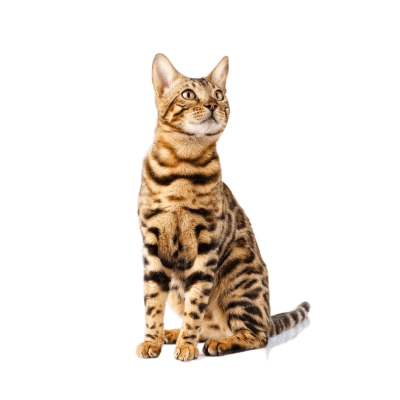
The Bengal is one of the most visually striking cat breeds, known for its spotted or marbled coat that resembles a wild leopard. Beyond their beauty, these cats are energetic, playful, and highly intelligent. If you're looking for a cat with both stunning looks and a lively personality, the Bengal might be just right for you.
Personality & Temperament
Usually enjoys cuddles and being near people.
Likes interactive toys and learning games.
Needs daily activity and enrichment.
Learns routines fast; puzzle toys help a lot.
Personality in real life
Bengals are very active cats that require plenty of exercise and mental stimulation. They enjoy interactive toys, climbing, and playing with their owners.
They are highly intelligent and curious, often getting into things to explore. Bengals love to "help" with anything you're doing around the house.
These cats are social and love being the center of attention. While they’re affectionate, they can be a little independent and enjoy their own space too.
Bengals tend to do well with other pets, including dogs, and enjoy being around other animals, though they prefer playmates who can match their energy levels.
History
The Bengal is a modern breed that took shape in the United States during the late 20th century. It began with careful breeding between domestic cats and the Asian leopard cat, a small wild cat known for its striking spotted coat.
The idea was simple but bold: create a cat with a wild, leopard-like look, while keeping the friendly, social nature of a house cat. The first Bengals that matched this vision appeared in the mid-1980s.
As the breed developed, people quickly fell for its unique appearance and high energy. Bengals stood out for their confidence, curiosity, and love of activity.
Today, the Bengal is known for its athletic build and dramatic coat patterns — either spotted or marbled — which give it that unmistakable ‘wild at heart’ look.
Appearance
Bengals are medium to large cats with a sleek, muscular build, giving them a wild appearance. Their coat is short and dense, with a soft texture.
The most distinctive feature of the Bengal is its coat, which is either spotted or marbled, resembling that of a wild leopard or ocelot.
They have large almond-shaped eyes that are typically gold or green, and their ears are small and rounded.
Their tail is thick and tapers slightly at the end, and they carry it gracefully when moving around.
Is a Bengal right for you?
Good fit if:
- • You want an active, energetic cat that loves to play and explore.
- • You have time to give them plenty of attention, exercise, and mental stimulation.
- • You want a social cat that gets along well with other pets and people.
- • You enjoy a cat that is intelligent and can learn tricks or commands easily.
Not ideal if:
- • You want a laid-back, low-energy cat that prefers to nap all day.
- • You don’t have the time to provide enough play and exercise to keep them happy.
- • You prefer a cat that doesn’t get into everything or require mental stimulation.
Daily life with a Bengal
Energy level
Bengals are very high-energy cats that love to climb, explore, and play. They need daily interaction and playtime to stay happy.
Noise level
While they are not overly vocal, Bengals do enjoy chatting and chirping when excited or trying to get attention.
Attention needs
They are social cats and enjoy being with their family, but they are also independent enough to entertain themselves for a while.
Grooming
Bengals have a short, easy-care coat that requires minimal grooming. A weekly brushing is usually enough to keep their coat shiny.
Things to Know Before Adopting
- • High energy means they need daily play and exercise; without enough stimulation, they can become mischievous.
- • Their curiosity often leads them to explore places where they shouldn’t be, which can get them into trouble.
- • Bengals may not be suitable for people who prefer more low-maintenance, relaxed cats.
- • They can be demanding in terms of time and attention, so they may not be ideal for owners who are away from home often.
Interesting Facts
Bengals are known for their love of water! Many Bengals enjoy playing in the sink or even swimming in the bathtub.
Similar Cat Breeds
Savannah
Both breeds have a wild appearance and high energy, though the Savannah has a closer connection to wild servals.
Egyptian Mau
Like the Bengal, the Egyptian Mau has a beautiful coat with spots and shares a playful, energetic personality.
Ocicat
The Ocicat also has a wild-looking coat but is fully domestic, similar in temperament and personality to the Bengal.
CatsLib Team
Editorial & Research Team
CatsLib content is written and reviewed by our editorial team. We focus on clear, practical guidance for cat owners and regularly update articles when recommendations change.
About our editorial process
Sources & References
(2)
All information on CatsLib is backed by reputable sources. We regularly review and update our content to ensure accuracy.
Our editorial process: Every article is reviewed by veterinarians and feline behavior experts. We cross-reference multiple sources and update content regularly to maintain accuracy.
Frequently Asked Questions
Quick answers to the most common questions about this topic
1
Are Bengal cats hypoallergenic?
Bengal cats are not considered hypoallergenic, but they are lower-shedding than some other breeds, which may help with allergies.
2
How much do Bengal cats cost?
Bengal cats typically cost between $1,000 and $4,000, depending on the breeder, lineage, and whether the cat is show quality.
3
How big do Bengal cats get?
Bengal cats are medium to large in size, with males weighing between 4.5 and 7 kg and females weighing slightly less.
4
What is a Bengal cat?
A Bengal cat is a breed known for its striking spotted or marbled coat that resembles a wild leopard, and its energetic, playful personality.
5
Why are Bengal cats illegal?
Bengal cats are illegal in some places due to concerns over their wild ancestry. Many areas have restrictions on owning exotic hybrid cats.
6
How long do Bengal cats live?
Bengal cats typically live between 12 and 16 years with proper care.
Still have questions? We're here to help!