
Birman
Blue eyes, white gloves, and a gentle, loving personality
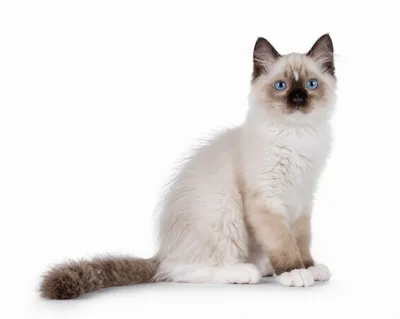
Quick answer: The Birman is a sweet, people-friendly cat with deep blue eyes, a silky semi-long coat, and neat white 'gloves' on all four paws.
Personality Traits
Quick Facts
Overview
The Birman (often called the 'Sacred Cat of Burma') feels like a gentle roommate with movie-star looks. They are loving, social, and usually easy to live with. You get the fancy blue eyes and those neat white paws without a high-maintenance vibe.
Personality & Temperament
Usually enjoys cuddles and being near people.
Likes interactive toys and learning games.
Adapts well to most households.
Learns routines fast; puzzle toys help a lot.
Personality in real life
Birmans are sweet, affectionate, and very people-oriented. They like being near you, not just in the same house.
They are playful and curious, but usually not wild or frantic. Think 'fun' more than 'chaos'.
Many are calm with kids and can do well with other pets when introduced slowly.
They are often fairly quiet, but can get chatty if they learn it gets them attention.
History
The Birman is wrapped in old temple legends from Southeast Asia, where cats were said to guard sacred spaces and carry the spirits of priests. But the modern Birman story begins much closer to home — in Europe.
In 1919, a pair of Birmans arrived in France. Breeders quickly focused on preserving what made them special: deep blue eyes, soft color-point coats, and those perfectly white ‘gloves’ on each paw.
By 1925, the breed was officially recognized in France and admired not just for its looks, but for its calm, gentle nature and love of human company.
During the 1960s, Birmans made their way to England and the United States. What started as an exotic rarity soon became a beloved family companion around the world.
Appearance
Birmans have classic color-point markings with a lighter body and darker color on the face, ears, legs, and tail.
Their eyes are always a deep, clear blue.
They are famous for the white paws: neat 'gloves' on the front feet and higher white markings called 'laces' on the back legs.
The coat feels soft and silky and is often easier to manage than many long-haired coats. A light weekly comb-through is usually enough.
Birmans are medium-sized cats with a solid, well-balanced build.
Is a Birman right for you?
Good fit if:
- • You want a gentle, affectionate cat that enjoys company.
- • You like a calm, friendly breed that still plays every day.
- • You want a beautiful coat that is often easier to maintain than it looks.
- • You want a cat that fits well into family life.
Not ideal if:
- • You want a very independent cat that does not care where you are.
- • You are away from home for long hours every day and your cat will be alone a lot.
- • You want a zero-grooming cat (Birmans still do best with weekly brushing).
Daily life with a Birman
Energy level
Moderate. They enjoy play sessions and then happily relax nearby.
Noise level
Usually on the quieter side, but some learn to 'talk' if it works.
Attention needs
Medium-high. They like companionship and do best with daily together time.
Grooming
A weekly comb-through is usually enough to keep the coat tidy and smooth.
Things to Know Before Adopting
- • They can get lonely if they do not get enough daily attention.
- • The coat is usually easy, but it still looks best with weekly brushing.
- • White paws can show dirt faster, especially in messy weather or dusty homes.
- • If you always respond to meows, some Birmans will become little chatters.
Interesting Facts
The Birman's white paws are iconic: 'gloves' in front and 'laces' on the back legs.
Similar Cat Breeds
CatsLib Team
Editorial & Research Team
CatsLib content is written and reviewed by our editorial team. We focus on clear, practical guidance for cat owners and regularly update articles when recommendations change.
About our editorial process
Sources & References
(3)
All information on CatsLib is backed by reputable sources. We regularly review and update our content to ensure accuracy.
Our editorial process: Every article is reviewed by veterinarians and feline behavior experts. We cross-reference multiple sources and update content regularly to maintain accuracy.
Frequently Asked Questions
Quick answers to the most common questions about this topic
1
What is a Birman cat?
The Birman is a blue-eyed, color-point cat with a silky semi-long coat and four white 'gloves' on the paws. They are known for being gentle and affectionate.
2
Are Birman cats friendly?
Yes. Birmans are usually sweet, social, and people-focused. Many love being close to their family.
3
Do Birman cats shed a lot?
Usually not as much as many long-haired cats. They still shed, but weekly brushing helps keep it under control.
4
Are Birman cats hypoallergenic?
No. They can still trigger allergies like other cats.
5
How long do Birman cats live?
Many Birmans live around 12 to 16 years with good everyday care.
6
How big do Birman cats get?
They are usually around 10 to 15 lb, and many feel solid and muscular when picked up.
Still have questions? We're here to help!