
Burmese
Cuddly, social, and always close by
Quick answer: The Burmese is a people-loving, lap-seeking cat with a silky coat and a playful personality.
Personality Traits
Quick Facts
Overview
The Burmese is the kind of cat that wants to be where you are. They’re affectionate, social, and often happiest curled up on a lap (or at least right next to you). If you like a friendly “shadow cat” with a soft, glossy coat, the Burmese is a great match.
Personality & Temperament
Usually enjoys cuddles and being near people.
Likes interactive toys and learning games.
Needs daily activity and enrichment.
Learns routines fast; puzzle toys help a lot.
Personality in real life
Burmese cats are very people-oriented and love attention. Many follow you from room to room like a tiny supervisor.
They’re playful and enjoy games, including interactive toys and anything that feels like a shared activity.
They’re often described as sweet and tolerant, making them a nice fit for families.
Many Burmese have a soft voice and like to “chat” with their people in a gentle way.
History
The Burmese breed (as we know it today) was developed in the United States from a single foundation cat named Wong Mau. In 1930, Wong Mau was brought from the Orient and given to Dr. Joseph G. Thompson of San Francisco.
Early breeding included a Seal Point Siamese, and the program focused on isolating the distinctive Burmese look and temperament. Those early litters produced kittens in different color types, and the dark brown offspring became the foundation of the Burmese breed.
Over time, Burmese cats spread and were developed in both the United States and Great Britain. Today, official cat organizations describe the breed as originating near the Thai–Burma border, with modern development in the US and UK.
Appearance
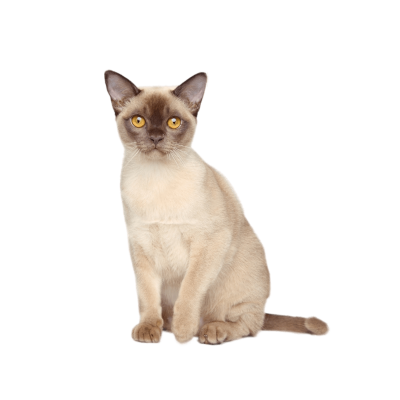
Burmese are medium-sized but often feel heavier than they look, thanks to their solid build.
They have a rounded head, expressive eyes, and a sweet, open expression.
Their coat is short, very close to the body, and has a glossy, satin-like look.
Colors include sable (the classic look) and several other solid and tortoiseshell colors, depending on the registry.
Is a Burmese right for you?
Good fit if:
- • You want a social cat that enjoys being near people
- • You like a cuddly companion that often seeks out laps
- • You enjoy daily play and interactive time
- • You want a short coat that’s easy to maintain
- • You want a friendly breed for a family home
Not ideal if:
- • You want a very independent cat that keeps to itself
- • You’re away often and can’t offer much daily interaction
- • You prefer a quiet home pet that doesn’t “follow” you around
Daily life with a Burmese
Energy level
Moderate to high. They enjoy play, climbing, and being included in the action.
Noise level
Often soft-voiced, but many like to communicate with gentle meows.
Attention needs
High. They thrive on company and do best when they’re part of daily life.
Grooming
Low. A weekly brush is usually enough to keep the coat looking smooth and shiny.
Things to Know Before Adopting
- • They can get lonely if left alone for long stretches
- • They may follow you everywhere (cute, but very involved)
- • They do best with daily play and attention, not a “set-and-forget” cat
- • Their confidence can make them curious about everything you’re doing
Interesting Facts
Many Burmese are famous lap-lovers and will claim any warm spot you offer.
CatsLib Team
Editorial & Research Team
CatsLib content is written and reviewed by our editorial team. We focus on clear, practical guidance for cat owners and regularly update articles when recommendations change.
About our editorial process
Sources & References
(3)
All information on CatsLib is backed by reputable sources. We regularly review and update our content to ensure accuracy.
Our editorial process: Every article is reviewed by veterinarians and feline behavior experts. We cross-reference multiple sources and update content regularly to maintain accuracy.
Frequently Asked Questions
Quick answers to the most common questions about this topic
1
What is a Burmese cat?
The Burmese is a medium-sized, people-oriented cat known for a glossy coat, a solid feel for its size, and a very affectionate personality.
2
Are Burmese cats hypoallergenic?
No. Burmese cats still produce allergens like other cats, even though they have a short coat.
3
Are Burmese cats friendly?
Yes. They’re known for being sweet, social, and very people-focused.
4
How long do Burmese cats live?
TICA lists a life expectancy of 12+ years. Many live into the teens with good everyday care.
5
How big do Burmese cats get?
They’re medium-sized, with males often larger. CFA notes mature males may reach or exceed 12 lb.
6
Do Burmese cats shed a lot?
Usually not. CFA describes them as low-maintenance with minimal shedding, and a weekly brush helps.
7
Are Burmese cats chatty?
Many are. TICA notes they have a soft voice and enjoy ‘talking’ with their families.
Still have questions? We're here to help!