
Why cats do this
Picture this: you're getting a nice back massage. It feels great for five minutes. Then ten. Then fifteen. At some point, you'd probably say 'okay that's enough.' Cats are the same — except they say it with their teeth.
This is totally normal cat behavior. It even has a name: petting-induced overstimulation (or 'love bites' if you want to be cute about it). The nerve endings in their skin get overwhelmed, and what felt good suddenly feels like too much.
The tricky part is that cats often purr right up until they bite. Purring doesn't always mean 'keep going' — sometimes it means 'I'm trying to stay calm here.' That's why learning your cat's specific warning signs matters so much.
Some cats have a longer fuse than others. Some will let you pet them for ages. Others hit their limit after thirty seconds. Neither is wrong — it's just their personality.
What you can do
The goal isn't to 'fix' your cat — it's to learn her language so you can stop before she needs to bite.
-
1Step 1: Watch for warning signs. Skin twitching, tail flicking, ears turning back, suddenly staring at your hand, stopping the purr — these all mean 'I'm getting close to done.'
-
2Step 2: Stop petting BEFORE she bites. When you see those signals, calmly remove your hand. Don't make it dramatic. Just stop.
-
3Step 3: Keep sessions short. If she usually bites after two minutes, stop at ninety seconds. Leave her wanting more.
-
4Step 4: Let her come to you. Cats who initiate contact usually tolerate more petting. If you always go to her, try waiting for her to approach.
-
5Step 5: Stick to safe zones. Most cats prefer chin scratches and cheek rubs over belly or back-end pets. Learn her favorite spots.
What NOT to do
Never hit, yell at, or punish a cat for biting during pets. She's not being bad — she's communicating. Punishment just teaches her that hands are scary, which makes everything worse.
Don't push through the warning signs thinking she'll get used to it. She won't. You'll just teach her that subtle signals don't work and she needs to go straight to biting.
Don't pull your hand away fast when she bites. Quick movements trigger prey drive and she might grab harder. Freeze, then slowly withdraw.
When to call a vet
Petting bites are usually just communication. But sometimes they mean something else.
- • She suddenly hates being touched in a spot she used to enjoy — might mean pain
- • Bites are getting harder or more frequent for no clear reason
- • Aggression with no warning signs at all — just sudden attacks
- • She seems uncomfortable or flinches when you touch certain areas
- • Other changes like not eating, hiding, or litter box problems
Kittens, seniors, and anxious cats
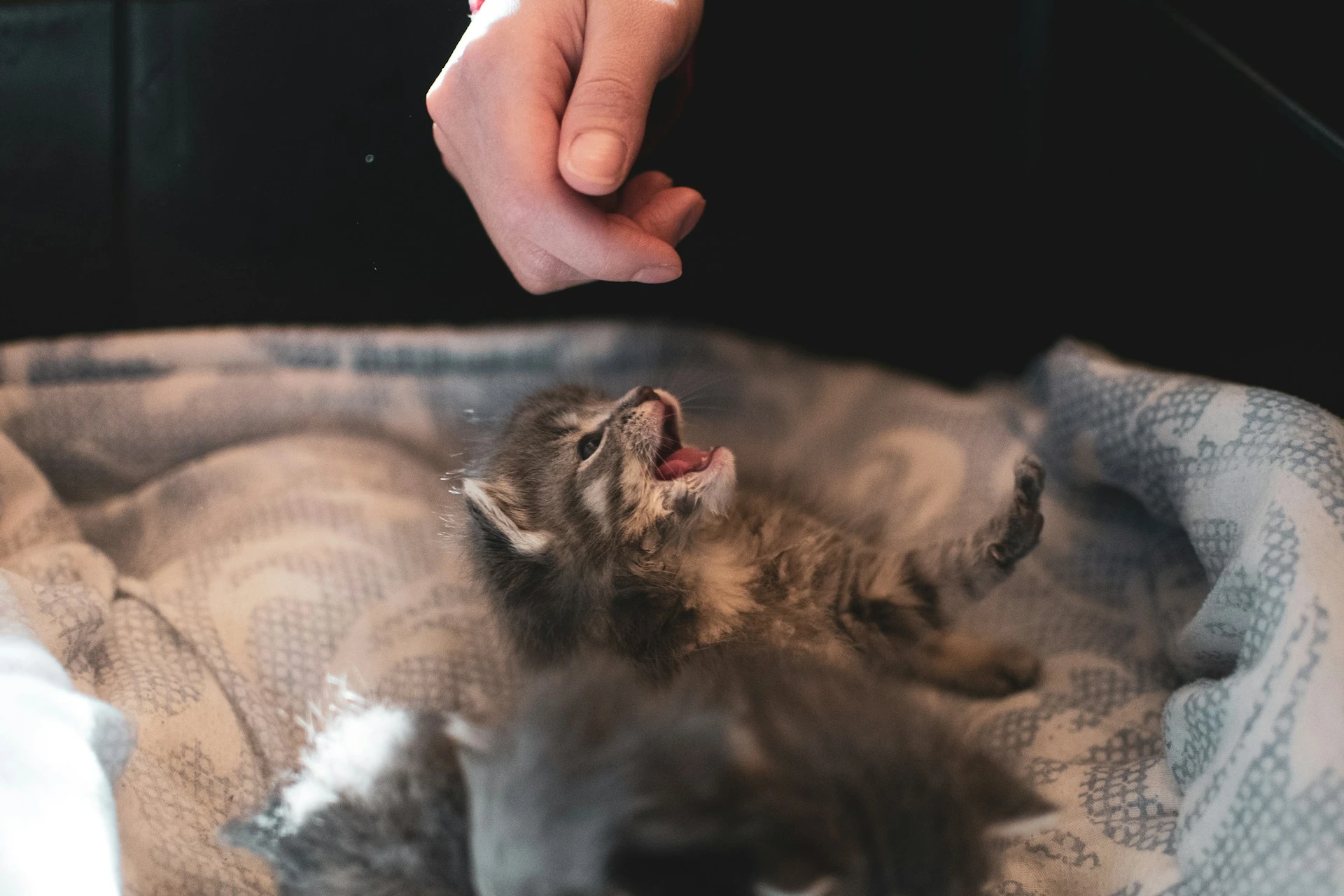
Kittens bite during play because that's how they learned to interact with littermates. If your kitten bites during pets, she might be trying to start a play session. Redirect to a toy, not your hand. Never play with kittens using your fingers — it's cute now, painful later.
Senior cats sometimes develop lower tolerance for touch. Arthritis, skin sensitivity, or just general grumpiness can make petting uncomfortable. If your older cat used to love long pets and now doesn't, a vet check is a good idea.
Anxious cats might bite because they're on edge, not overstimulated. If your cat seems nervous — crouching, dilated pupils, looking for escape routes — she might not be in petting mode at all. Give her space and let her come to you when she's ready.
FAQ
Frequently Asked Questions
Quick answers to the most common questions about this topic
1
Why does my cat bite me then lick me?
She's probably saying 'too much' with the bite, then 'but I still like you' with the lick. It's confusing, but cats are confusing. The bite is the important message — she wants you to ease up.
2
Why does my cat bite me gently while purring?
Gentle nibbles while purring can actually be affection — like little cat kisses. If they're soft and she seems relaxed, it's probably love. If she tenses up and the bite gets harder, she's getting overstimulated.
3
Why does my cat bite me when I stop petting?
Some cats bite to say 'hey, I wasn't done!' It's demanding, but kind of flattering. You can either give a few more pets or just ignore it — giving in every time creates a bossy cat.
4
How do I know when my cat is about to bite?
Watch for: tail swishing or thumping, skin rippling, ears flattening or turning sideways, pupils dilating, suddenly staring at your hand, or that tense stillness. Every cat has their own tells.
5
Why does my cat only bite me and not other people?
You probably pet her more than anyone else, so you're more likely to hit her limit. Or you might miss her signals that others catch. It's not personal — she's just more comfortable being honest with you.
6
Can I train my cat not to bite when petted?
Sort of. You can't change her tolerance level, but you can get really good at stopping before she needs to bite. Over time, she might even learn that pets always end nicely, and her tolerance might grow a little.
7
Why does my cat grab my hand with her paws when she bites?
That's the classic bunny-kick combo. It's a hunting move — grab prey, bite, kick with back feet. When directed at your hand, it usually means playtime or overstimulation went too far.
8
Is it okay to scruff my cat when she bites?
No. Scruffing an adult cat is stressful and can hurt your bond. It doesn't teach her anything useful. Just calmly remove your hand and walk away.
Still have questions? We're here to help!
Sources
Sources & References
(3)
All information on CatsLib is backed by reputable sources. We regularly review and update our content to ensure accuracy.
Our editorial process: Every article is reviewed by veterinarians and feline behavior experts. We cross-reference multiple sources and update content regularly to maintain accuracy.
CatsLib Team
Editorial & Research Team
CatsLib content is written and reviewed by our editorial team. We focus on clear, practical guidance for cat owners and regularly update articles when recommendations change.
About our editorial process