
Chartreux
Calm, affectionate, and quietly charming
Quick answer: The Chartreux is a calm, affectionate French cat with a blue-gray coat and a gentle, seldom-used voice.
Personality Traits
Quick Facts
Overview
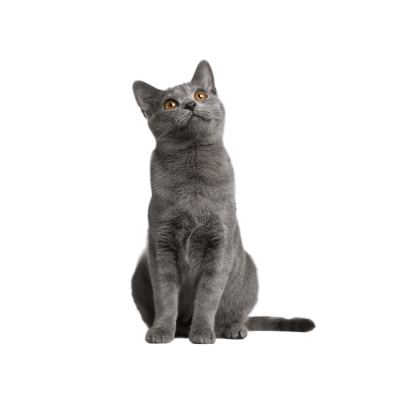
The Chartreux is the kind of cat that feels like a steady, cozy presence in the house. Calm, affectionate, and quietly playful, they tend to “hang out” near you instead of demanding attention. Add that plush blue-gray coat and those warm copper eyes, and yeah… it’s easy to fall in love.
Personality & Temperament
Usually enjoys cuddles and being near people.
Enjoys play, especially with routine.
Adapts well to most households.
Learns routines fast; puzzle toys help a lot.
Personality in real life
Chartreux cats are calm and affectionate. They like being close, but they’re usually not clingy.
Many have a gentle, seldom-used voice. They communicate more with looks and body language than loud meows.
They’re smart and observant. You’ll often catch them watching everything like a tiny, fluffy supervisor.
They can be playful, but often in short bursts. Then it’s back to relaxing like it’s their job.
History
The Chartreux is an old French breed surrounded by many stories. Over the centuries, these blue-gray cats have been linked to different origins, including long-standing legends connected to Carthusian monks.
The name ‘Chartreux’ has more than one explanation. Some connect it to monastery traditions, while others point to a Spanish wool called ‘la pile des Chartreux,’ which closely resembles the breed’s dense, slightly woolly coat.
Like many European breeds, Chartreux numbers fell sharply during the world wars. Afterward, devoted breeders worked carefully to preserve the breed’s classic look and calm, thoughtful temperament.
The Chartreux also holds a place in French culture. Writer Colette featured one in her 1933 novel *La Chatte*, and the breed has long been seen as a quiet symbol of France.
Appearance
Chartreux cats are sturdy and muscular, with a “solid” feel when you pick them up.
Their coat is dense and plush, often described as slightly woolly. The color is blue-gray in varying shades.
Their eyes are a standout feature, often ranging from yellow to copper.
Their face can look like it’s smiling, thanks to the shape of the head and muzzle.
Is a Chartreux right for you?
Good fit if:
- • You want a calm, affectionate cat that’s easy to live with
- • You like a quiet cat that doesn’t “talk” all day
- • You want a smart companion that’s gentle and observant
- • You prefer a low-maintenance coat with regular combing
- • You want a breed that can be a good family pet
Not ideal if:
- • You want a super high-energy cat that plays nonstop
- • You prefer a very vocal cat that “chats” a lot
- • You want a cat that is always in your lap (many prefer being near you instead)
Daily life with a Chartreux
Energy level
Calm to moderate. They play in short spurts, then relax.
Noise level
Usually quiet. Many have a gentle, seldom-used voice.
Attention needs
Affectionate and loyal, but often more “near you” than “on you.”
Grooming
Their dense coat does best with regular combing, especially during seasonal shedding.
Things to Know Before Adopting
- • Their dense coat can shed more during seasonal changes, so regular combing helps
- • They can be reserved with strangers at first and warm up as they feel comfortable
- • Because they’re calm, it’s easy to underestimate how much they enjoy daily play
- • Finding one can take time in some places, since the breed isn’t common everywhere
Interesting Facts
They’re often described as having a “smiling” expression.
CatsLib Team
Editorial & Research Team
CatsLib content is written and reviewed by our editorial team. We focus on clear, practical guidance for cat owners and regularly update articles when recommendations change.
About our editorial process
Sources & References
(3)
All information on CatsLib is backed by reputable sources. We regularly review and update our content to ensure accuracy.
Our editorial process: Every article is reviewed by veterinarians and feline behavior experts. We cross-reference multiple sources and update content regularly to maintain accuracy.
Frequently Asked Questions
Quick answers to the most common questions about this topic
1
What is a Chartreux cat?
The Chartreux is a French breed known for its blue-gray coat, copper-to-golden eyes, sturdy build, and calm, affectionate personality.
2
Are Chartreux cats friendly?
Yes. They’re typically affectionate and easy to live with, and many bond strongly with their people.
3
Are Chartreux cats hypoallergenic?
No. They’re not hypoallergenic. Like all cats, they produce common allergens, and their dense coat can shed—especially seasonally.
4
How long do Chartreux cats live?
A commonly listed range is about 12–15 years, though any cat’s lifespan can vary.
5
How big do Chartreux cats get?
They’re often medium to large, commonly listed around 11–18 lb (about 5.0–8.2 kg).
6
Are Chartreux cats rare?
They can be. Availability depends a lot on where you live and how many breeders are in your region.
7
How much does a Chartreux cat cost?
Prices vary widely by country, breeder, and pedigree. Always choose a reputable breeder and ask clear questions.
8
Why can’t Chartreux cats meow?
They can meow—many are just naturally quiet and tend to use a gentle, soft voice.
Still have questions? We're here to help!